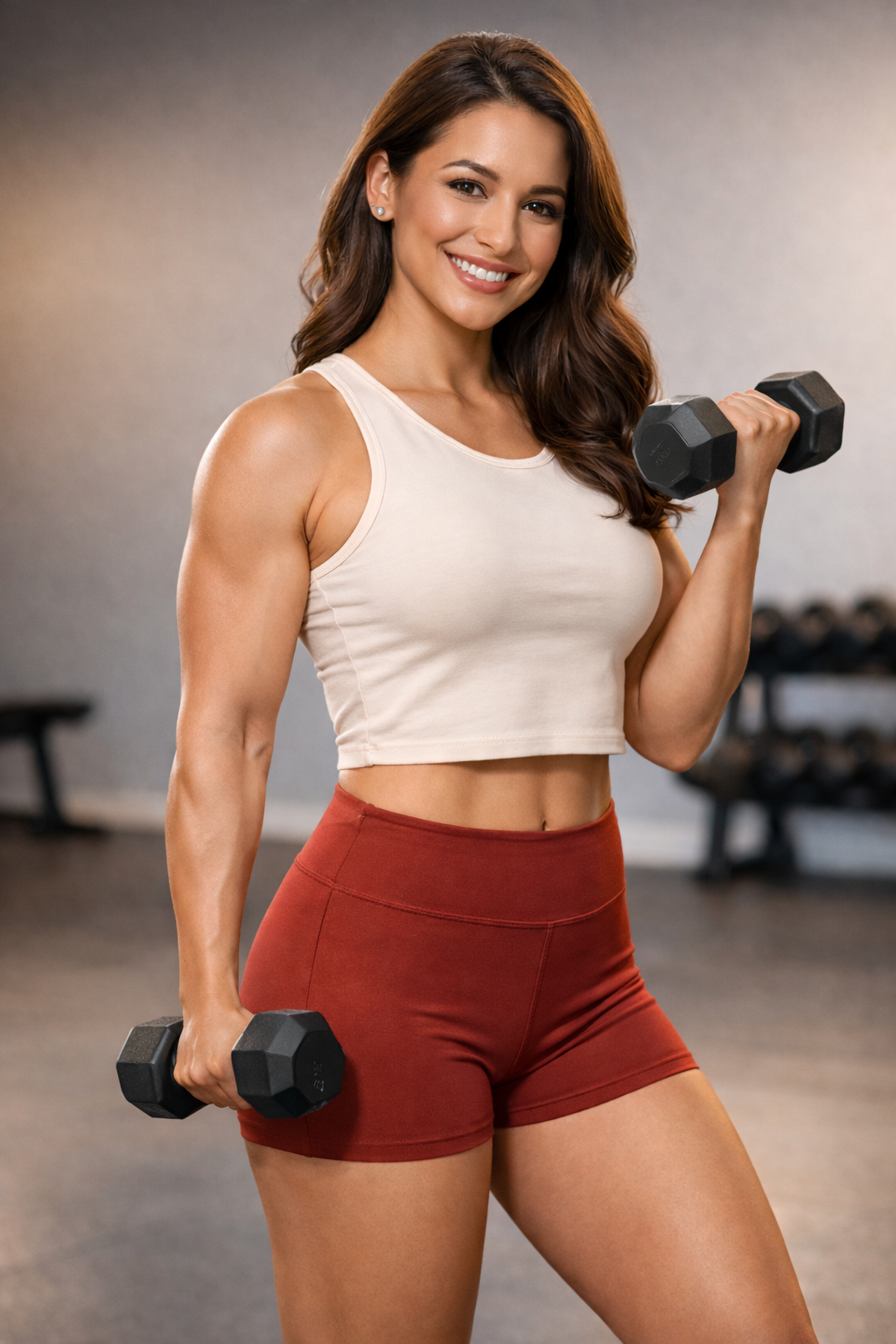
Muscle Overview
The bicep is one of the easiest muscles for players to notice, which makes it great
for visible progress and positive feedback. Bailey's page should use that familiarity
without becoming shallow or gimmicky.
Muscle Map and Group Key
Card quick key: front upper arm between shoulder and elbow. On the website, Bailey's
bicep label expands into the two heads of the biceps brachii plus the brachialis so
the arm-training story feels more complete than a single buzzword.
Biceps brachii long head
Contributes to the visible upper-arm shape and helps with elbow flexion and pulling work.
Biceps brachii short head
Works with the long head so curls and pulls feel controlled instead of sloppy.
Brachialis support
Sits beneath the biceps and helps the elbow-flexor family do more of the work.
Today's Move
Start with hammer curls. They feel natural for many beginners, train the arms with a
clean wrist position, and help the page feel instantly useful.
Exercise Ladder
Beginner: Alternating Dumbbell Curls
Use a steady tempo and avoid swinging so the arm, not the torso, drives the rep.
Intermediate: Hammer Curls
Keep the elbows close and the wrists neutral so the movement stays smooth.
Advanced: Assisted Chin-Ups
Pull with control and use the lowering phase to build strength without rushing.
Form Reminder
Bailey's main coaching cue is simple: if you have to swing the weight, the rep is
starting to serve ego better than muscle.